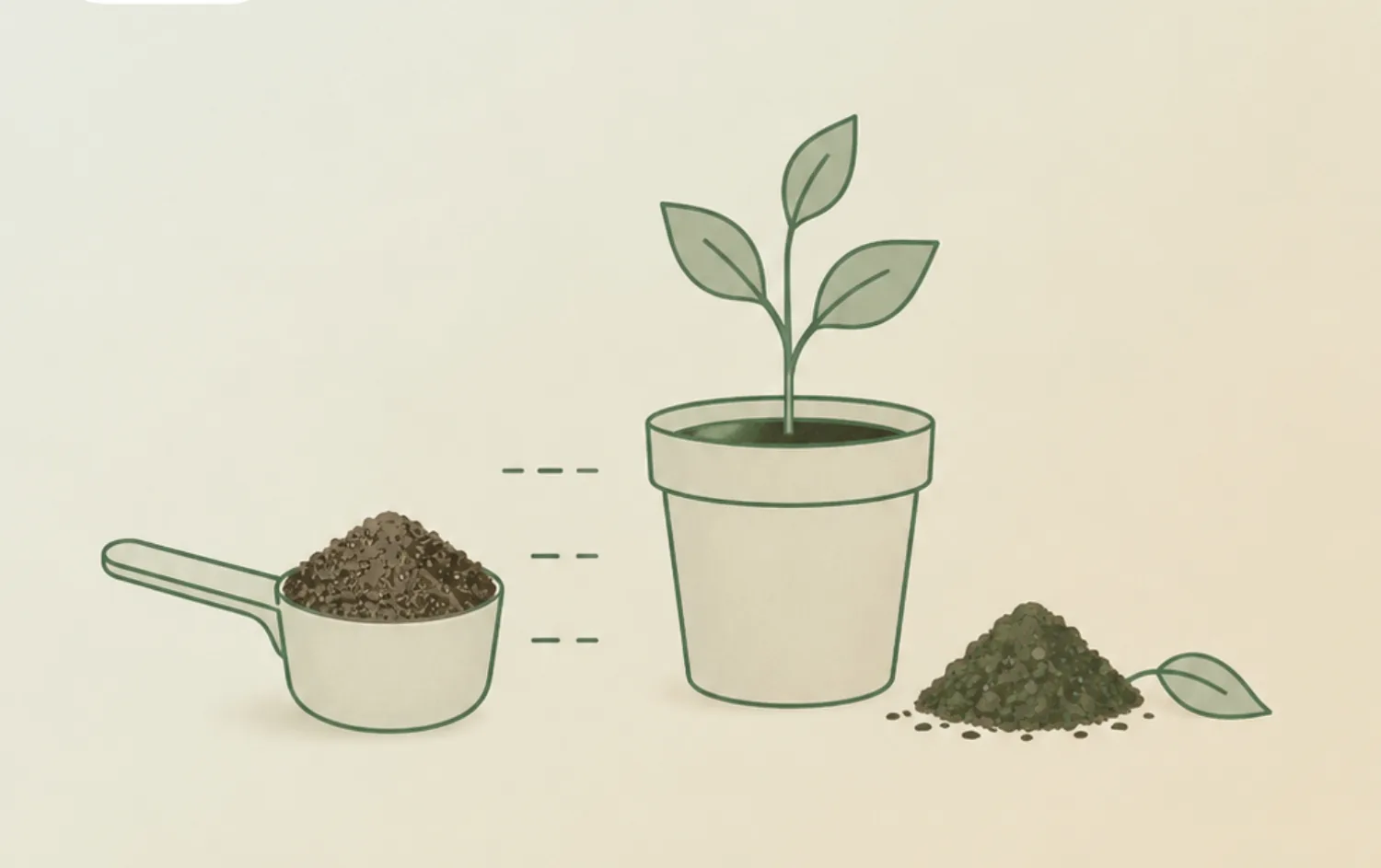
There's no single right amount — how much vermicompost to use depends on what you're growing and where. As a general starting point: loosen the top layer of soil around the plant, mix in the recommended quantity from your pack's label, and water afterward so it begins working into the root zone.
For potting mixes, blend up to roughly 20% vermicompost by volume into your growing medium — more isn't necessarily better, since vermicompost is a soil conditioner rather than a like-for-like potting soil replacement. For established plants, apply a light top dressing periodically rather than one large quantity.
If you're unsure for a specific crop, bed size or growing stage, our team can help — reach out with your growing setup and we'll suggest a starting quantity.
Guide
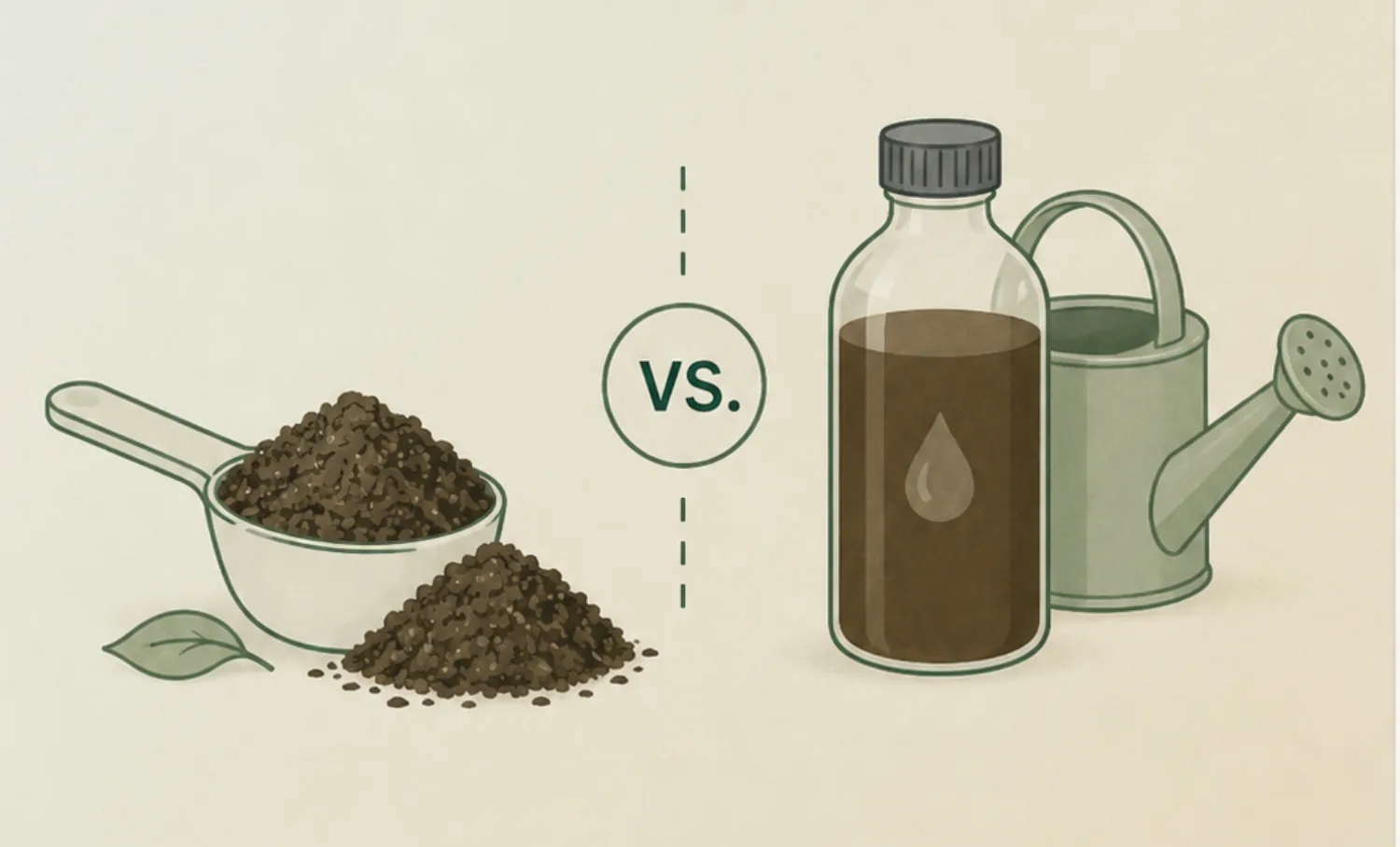
Vermicompost vs. vermiwash: what's the difference?
Vermicompost and vermiwash come from the same vermiculture process, but they work differently in the garden.
Vermicompost is the solid, matured material — screened, dark and crumbly. It's mixed into soil or a potting blend, where it improves structure, moisture retention and long-term biological activity. Think of it as a soil conditioner you apply periodically, not a fast-acting feed.
Vermiwash is a filtered liquid collected from a separately managed vermiculture system. Diluted and used alongside regular watering, it acts as a supplementary liquid feed — useful between vermicompost applications, or for a quick top-up during active growth. Most home gardens benefit from both: vermicompost as the soil-building foundation, vermiwash as the in-between feed.
Guide
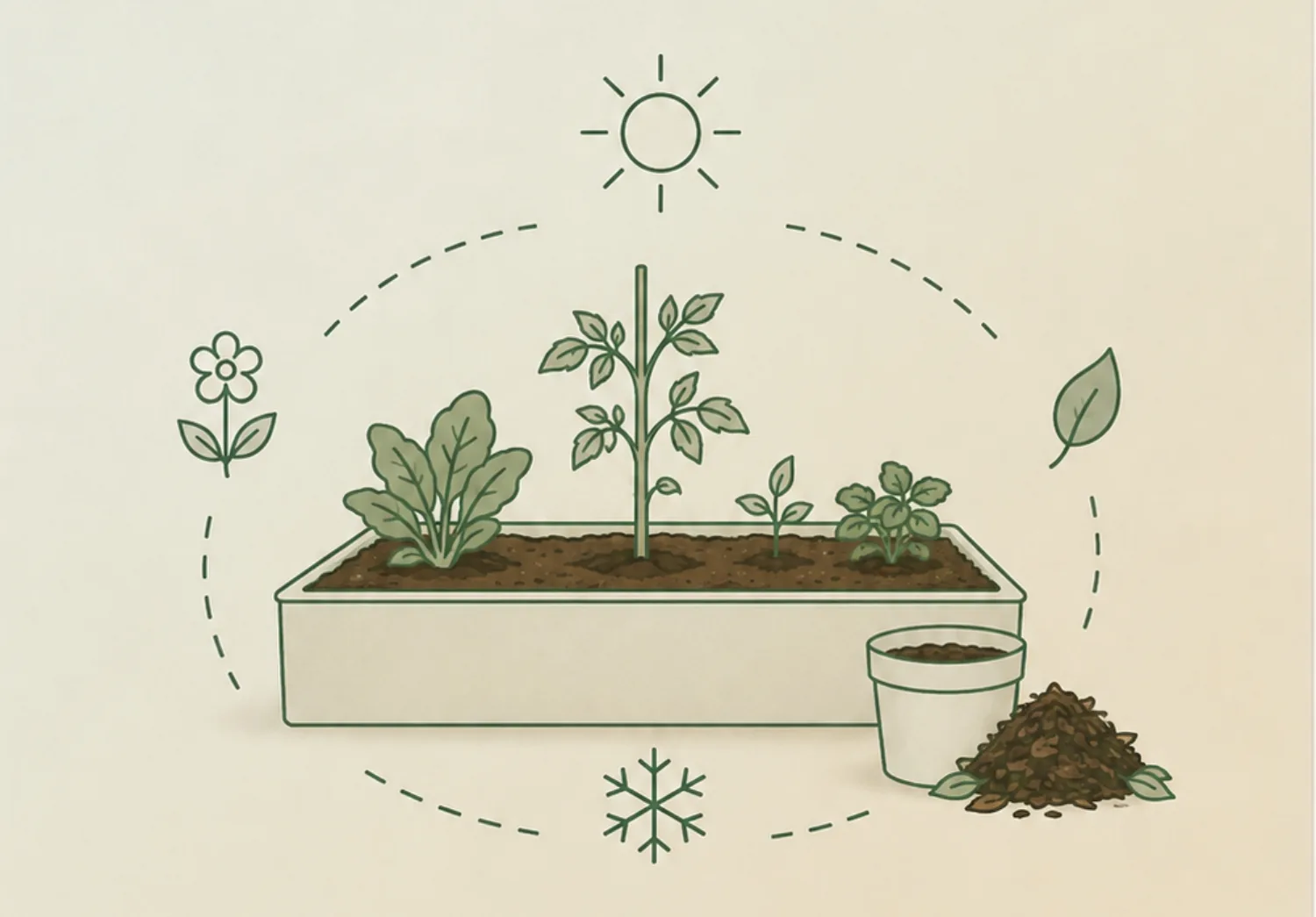
Seasonal soil care for home gardens
Soil biology doesn't stay still through the year — it slows in the cold, speeds up in the heat, and needs different support at each stage.
Going into the warmer growing months, refresh beds and pots with a vermicompost top dressing before the main planting push, and water it in well so the soil holds moisture through hotter weeks.
Through the cooler months, growth slows and so does biological activity in the soil — this is a good time for a lighter maintenance dose rather than a heavy application, since uptake is naturally slower. Whatever the season, avoid letting soil dry out completely or stay waterlogged for long stretches — both stress the microbial and earthworm activity vermicompost is there to support.
Guide
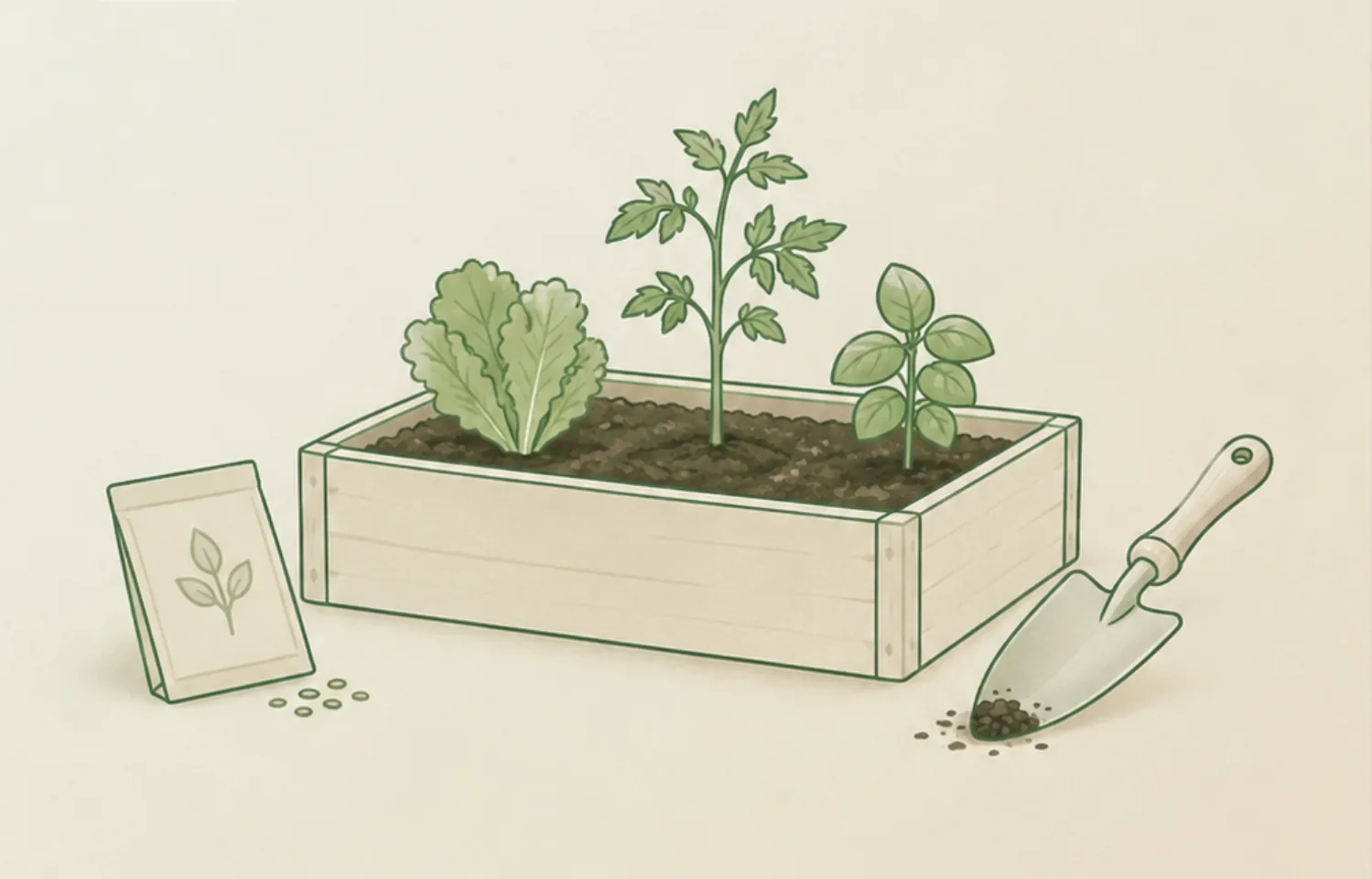
Starting a kitchen garden from scratch
A kitchen garden doesn't need much space — a few containers, a raised bed or a small patch of soil is enough to get started.
Begin with the soil: mix vermicompost into your growing medium (roughly 20% by volume for a fresh potting mix), which gives young roots a head start without overwhelming them. Space seedlings according to their mature size rather than how small they look at planting.
For the first few weeks, keep the soil consistently moist rather than alternating between dry and soaked, and hold off on additional feeding until the first true leaves appear. From there, a light vermiwash feed every couple of weeks alongside regular watering keeps things moving. Our Kitchen Garden Combo bundles vermicompost, vermiwash and a printed guide sized for exactly this kind of first-time setup.
Guide
Choosing between retail, professional and bulk supply
The right pack size comes down to scale and frequency, not just quantity.
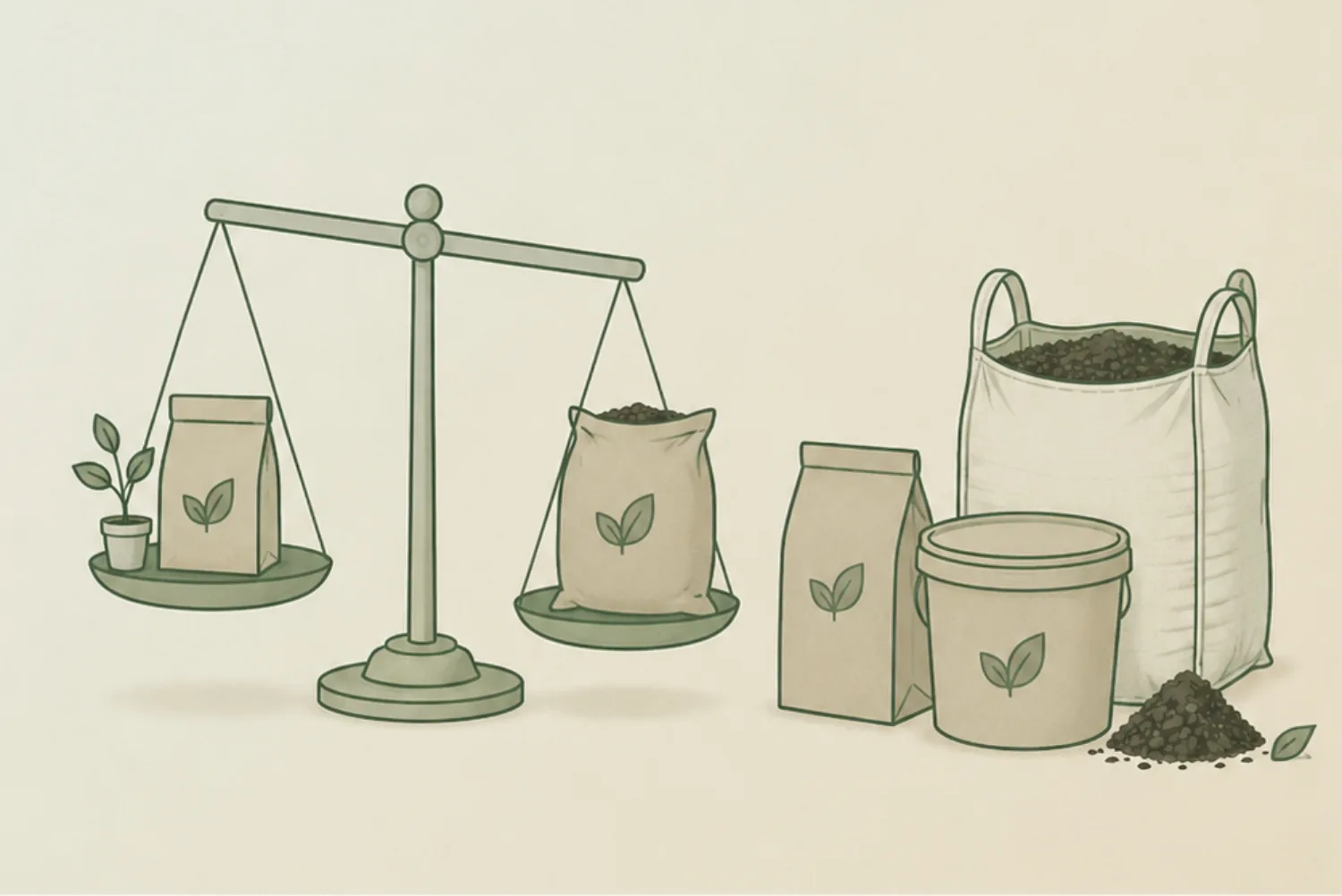
Retail packs (1–10 kg) suit home gardens, balconies and small kitchen gardens — sized for occasional top-ups rather than continuous use. If you're gardening across a full terrace or several beds, our Repeat Supply Subscription avoids reordering every time.
Professional Packs are built for nurseries, orchards and farms working at a larger, ongoing scale, where pricing depends on quantity, frequency and delivery location rather than a fixed shelf price. Bulk Supply and project-based quotations exist for forestry, land-restoration and large civil or landscape projects — here, our team works from your site conditions and planting plan before quoting, since every project's soil and logistics needs differ. See the full range on the shop page.
Guide
What actually happens inside a vermicomposting bed
Vermicomposting is a controlled biological process, not just decomposition left to chance.
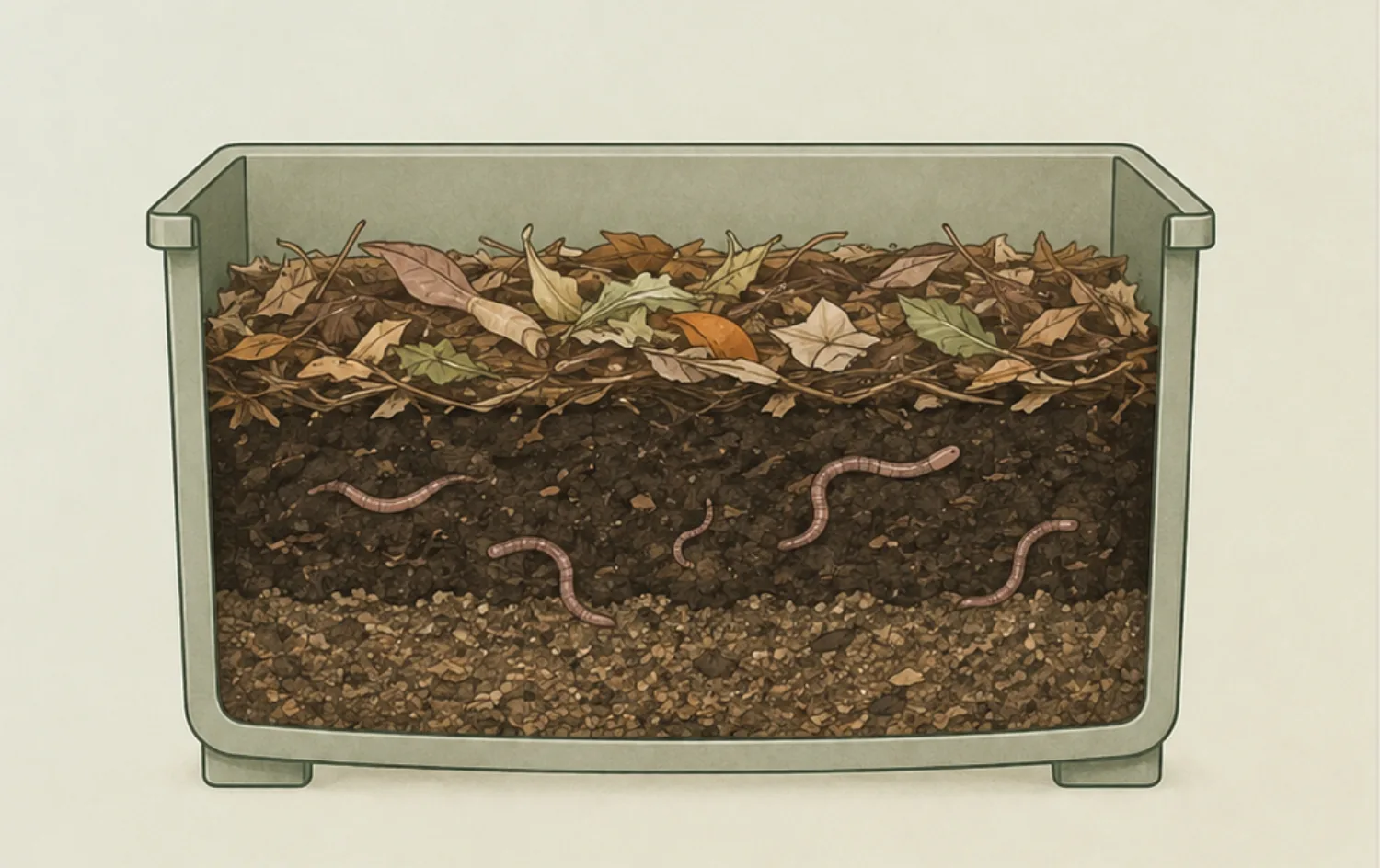
It starts with raw material selection and precomposting, which begins breaking down organic matter and brings it to a temperature and moisture range earthworms can safely work in. The earthworms are then introduced, and they process the material through their digestive systems — this is where most of the transformation happens, turning raw organic matter into a fine, nutrient-rich casting.
Through this stage, moisture and temperature are monitored and adjusted, since earthworms are sensitive to both extremes. Once the material has matured, it's left to stabilise before screening removes anything coarse or unprocessed, leaving the fine, dark, crumbly texture that goes into every pack. The whole cycle typically takes two to three months from start to finish — see our FAQs for more on how it's made.
Yes. Our Home Starter Pack is screened to a fine, even texture specifically for pots, balconies and indoor growing, and mixes cleanly into potting soil without overwhelming delicate roots.
It depends on the application — as a soil additive, in a potting mixture, or as a top dressing for established plants. Each product page lists a starting quantity, and our team can advise for larger or specialised plantings.
Vermicompost is the solid, matured soil conditioner. Vermiwash is a filtered liquid collected from a separately managed vermiculture system, used diluted as a supplementary feed alongside regular watering.
Through a controlled cycle: raw-material selection, precomposting, vermicomposting with earthworms, moisture and temperature control, maturation, screening and hygienic packaging — typically two to three months from start to finish. See the full process →
Yes — Professional Packs and Bulk Supply are available for farms, nurseries, orchards, landscaping and restoration-scale projects. These are quotation-based; request a quote from any professional or bulk product page and our team will follow up.
Keep it sealed and stored away from direct sunlight, excessive heat and water. Properly stored, most packs hold their quality for up to 12 months.
We ship pan-India through our logistics partner, iThink Logistics, with delivery timelines confirmed at checkout based on your pincode. Online payment and cash-on-delivery options will be enabled as our payment integration goes live — contact us if you'd like to place an order in the meantime.